The Basics of Meditation

The Basics of Meditation

In recent years meditation has become much more popular – it is no longer the preserve of initiates, or those who have dedicated themselves to the esoteric life. It is open to everyone. And everyone seems to have a different way of doing it.

And a different definition of what it is!

Put ‘What is Meditation’ into google and you will get 368million results!

This is both a good thing, and a bad thing. Its good that this timeless magical technique is now easily accessible, so that the earnest seeker can reap the benefits of including it in their magical practice. Its good that millions of people everyday are able to reduce stress, increase their health, and become more focused and productive through just 5 to 10 mins of meditative exercises.

If you have not yet been sold on the benefits of mediation take a look at my previous blog “10 Reasons you should Start Mediating today”. Its a pretty good summary of why the widespread availability of meditation is an excellent thing.

But its also a bad thing, especially for us as Magical Practitioners. Endless books on mindfulness and endless you tube videos of ‘guided meditations’ have blurred the boundaries of what meditation is and the type of meditation which is most useful to you as witches and magicians. It also tends to give the impression that this is something to dip in and out of, something that is easy and requires little to no effort.

So when you try it and you don’t achieve Zen Master status an hour later its easy to give up. To relegate the book to the growing pile of things you’ll get round to learning later.

Because, be under no illusion. Meditation is simple, and its effects are profound. But it is not easy. Its hard work which requires dedication and consistency. But if you will let me, I’ll try and walk you through the maze and help you make sense of it all.

The popular images of Zen Buddhist meditators show us people who have spent a life time in study and practice to reach what appears to be perfect silence and peace, in a perfectly focused mind. Its never easy to start a new practice when you feel you are 10 or 20 years away from mastering it and making a difference.

It Feels Hard, BUT:

Just 10 minutes of meditation practice today will mean better sleep TONIGHT.

Even if that 10 minutes feels like failure.

Even if your mind wanders constantly for 10 minutes.

Because its not failure. Its what meditation is!

In this post I am going to break it down into simple steps – and there are just three of these to master today!

How to Meditate

Why Meditate?

Before we get to those steps let set some background. A little understanding goes a long way in learning something new.

There are many good reasons to meditate, but there is one overriding reason why I think every witch, pagan, magician, <insert your own personal magical path label here> should learn to meditate.

It quietens the conscious mind, and creates space within it.

Why is that important? Because when your mind is full, or over-spilling, as it is for much of the day, there is no space for anything else. No space for sub-conscious. No space for super-conscious. No space for spirit to speak to us. No space for the divine to enter.

When your mind is full can you recognise your own voice, and tell it apart from spirit?

When you undertake guided mediations without having mastered the art of making space in your mind, how can you differentiate between your own thoughts and insights and the ‘messages’ which you receive?

For this reason alone meditation is one of the most important magical skills that you can learn. Its a skill I teach every one of my coven students, because once you master it  new worlds are unlocked for you. It provides a ‘level up’ to your magical practice which is difficult to put into words and can only be experienced.

Mediation is Experiential – So get ready to experiment!

You could spend weeks reading about mediation. Amazon sell in excess of 50,000 books on the subject. But you cannot approach this as an acedemic training.

Its only when you put the books aside and spend just 5 or 10 minutes putting the techniques into practice that you will reap the benefits. In this article I will explain some techniques, and give some pointers and guidance. But I cannot explain or describe the results. My very best efforts at wordsmithing would be a pale comparator to your experience, and it would benefit you not one jot!

This is true no matter how badly you think you have meditated, or how new you are to meditation. In fact in the earliest days we often see the biggest strides in benefits.

The benefits you will see from 10 minutes of your mind constantly wandering and being pulled back are huge. And no beautiful prose composed by me – or any meditation author – will even come close. One adds to the noise in the mind, and one begins to train the mind to clear it away for more important matters.

So I ask you to make one commitment. Once you have read this article you will find just 5 minutes at some point today to implement the three steps I recommend.

Is that OK?

Can you find that 5 minutes?


Types Of Meditiation

There are many different approaches to mediation – but they broadly fall into two categories, Active and Passive meditations. But both are steps along a longer process to reaching silence and space within the mind.

Within these broad categories you find breath meditation, mantra, image focus, tattvas, transcendental, mindfulness, progressive relaxation, loving kindness…. I could go on and one and baffle you with options.

But you first need to understand what I mean when I talk of meditation.

Lets start with what it is not. I have already indicated that I am not talking about what is popularly termed ‘guided meditation’. This is not to diminish its importance, or its use to a witch – far from it!  Creative Visualisation or Pathworking , as it is also known is another key strand to our work. But I recommend this is approached after you have some experience with meditation under your belt.

Its also not contemplation. It’s understandable the this has become the common definition – after all the work meditation stems from the Latin ‘meditat’ – to have contemplated, or ‘meditari’ to measure. Its not a terrible description, it simply only tells half the story. Contemplation is a step along the road to meditation, and if this is as far as you ever got its further than many ever will. But you need to know its know the whole story.

I’m going to turn to some wiser folk than me for some help with definitions – each adds something new to our understanding and taken together will provide a shared understanding of what we are dealing with.

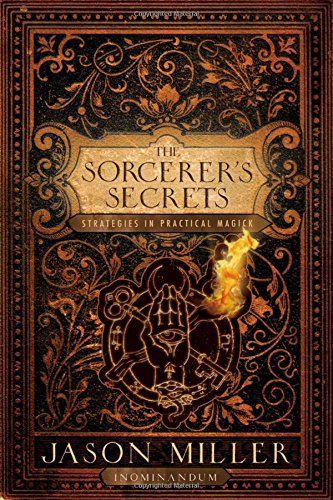
Jason Miller, The Sorcerer’s Secrets

Now let me clarify for a moment what I mean by meditation, because meditation  can mean plenty of things. The word itself is defined only as “to engage in mental  exercise for spiritual purposes,” which covers a lot of ground. So while technically  kneeling in prayer, doing Tai Chi, or lying on the bed and listening to Enya could be  considered meditation, they are not what I mean by meditation.  What I mean by meditation is process for alleviating the grasping at thoughts  and cutting through mental distractions through single pointed focus.

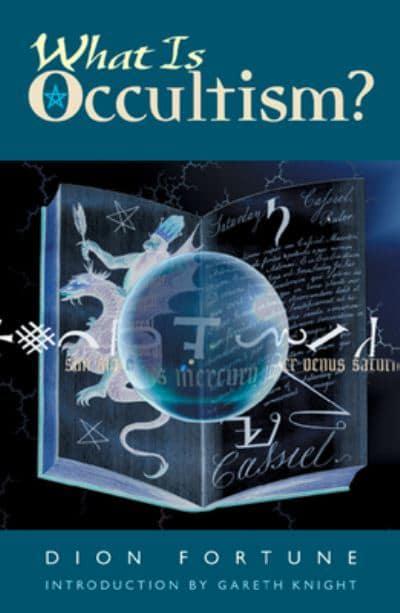
Dion Fortune, What is Occultism?

We can penetrate far into the  Unseen by means of meditation. Occult meditation is a combination of the two  methods of free association and directed reverie; it begins with free association,  starting with an idea which is known to have been derived from the Inner Planes by  the operation of the Higher Consciousness (that is why such books as the Voice of  the Silence are so valuable for meditation), and passes over, or should pass over,  into directed reverie; the secret of success lies in keeping the mind steadily on its  plane and subject, but leaving it free within the limits of that subject; an operation  which requires considerable experience and skill.

Donald Michael Kraig, Modern Magic

Most English dictionaries will define meditation as some form of  contemplation. The two words are seemingly almost synonyms.  Thus, those teachers who equate meditation with contemplation  would have you simply look at an object, listen to a sound, or contemplate a thought and call it meditation. It is not.  Meditation as it really exists is derived from an Eastern idea based  not on contemplation, but silence—the silence of the mind.

These quotes define the end game of meditation – they define where we are heading. If only for a few moments at a time. But there are steps along the way (and remember just 3 steps today!)

Those three steps are:

1) Sit comfortably and relax.

2) Notice your breathing

3) Focus

That’s it! That’s the basics of meditation.

It’s not ALL there is to meditation but its all we need now. These steps will deliver huge results if you keep repeating them. In fact I only got this far for over a year when I started and I still saw increasing benefits everyday and made massive magical progress.

So lets break it down even further. Lets take each step at a time and really understand what we are going to do.

Sit Comfortably and Relax

There are hundreds of variations for meditation positions, and it will take a while to find the right one for you. But today I want you to chose between just 2:

1. Sat upright on a dining chair

2. Sit on the floor in some variation of crossed legs (remember how we used to sit at primary school?!).

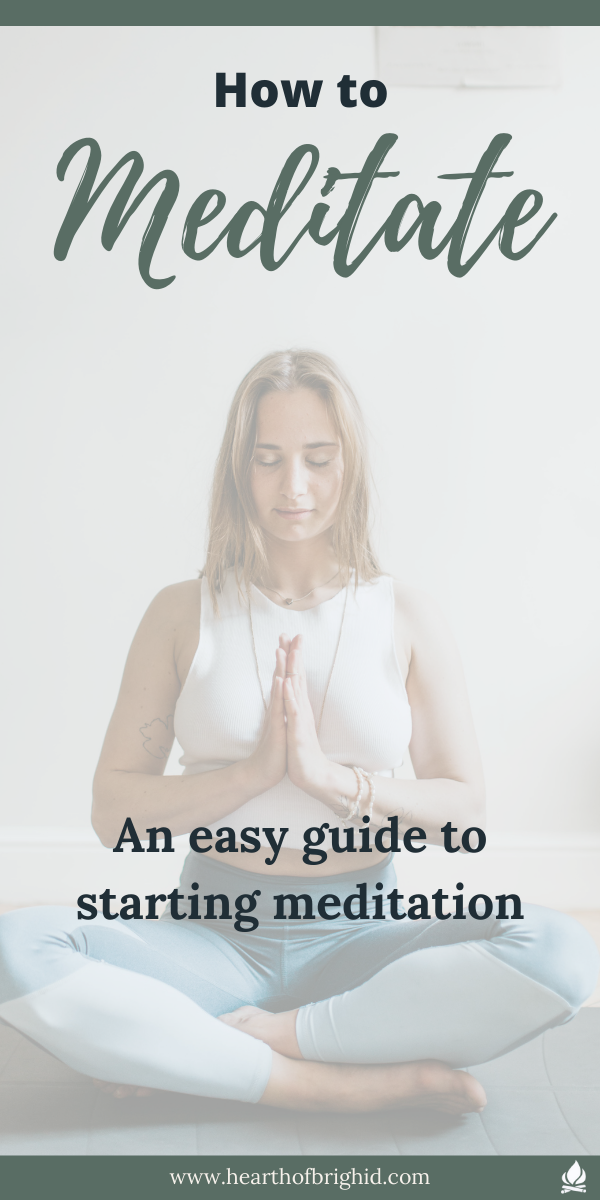
The photos on the left should give you an idea, but in each option you are aiming for a relaxed but straight spine and a position you can maintain without movement for about 10 mins.

A small meditation cushion can make sitting on the floor easier and more comfortable. Or sitting on an incline (literally a hillside!) just takes the pressure off slightly increase comfort in the early days.

I don’t recommend the kneeling position unless you have experience sitting like this as it tend to get uncomfortable quite quickly!

Place your hands on your knees. Experiment with palm up or down, see what feels right for you.

Next I want you to consciously relax your muscles. You might just perform a quick body scan noticing tension and correcting your posture to remove it.

Alternatively you might use the exercise given in my free e-book Starting Witchcraft. Or any other technique you are familiar with.

Notice Your Breathing

Once you are sat comfortably you might like to close your eyes. Reducing one of your senses out of the equation tends to make it easier to turn inwards.

Then take your attention to your breathing.

I don’t want you to change your breathing at all just notice it.

Feel the air coming into your body and leaving it. Just be aware of it for a few moments.

If your breathing is deep and slow – that’s fine. If its faster and shallow – that’s fine.

You are not trying to achieve anything but being aware of how your breath feels and moves your body.

 Focus

Again there are many many choices you could make here, but I’m going to make it simple again. You only have 2 choices!

Choose either your breath or a short phrase to focus on.

The phrase might be from a book which inspires you or you want to understand better. A favourite of mind is ‘the leaves of the tree are for healing’. (Its from the bible, but it also has many magical meanings). Any short phrase that resonates with you is fine.

You might like to choose one from this handy download I’ve prepared for you – 50 Meditation Focus Phrases.

Whatever you chose move your attention to it now. If you chose the breath you simply carry on with holding your attention on your breath, but try and hold it in one place. Perhaps your nostrils where the air enters and leaves. Or perhaps the rise and fall of your chest/stomach area.

If you choose a phrase simply hold it lightly in your mind – allowing thoughts to rise and fall away. Notice connections which are made and let them pass. Turn it around in your mind and view it from different perspectives, but keep your focus on this phrase and its meanings.

If your mind wanders from the breath or the phrase just gently bring your attention back to your focus.

Don’t worry or judge the Wander! Just bring it back. This is all part of the process.

In fact it is success – noticing the wander is magical development in action! Or as Joseph Goldstein says:

Every time we become aware of a thought, as opposed to being lost in a thought, we experience that opening of the mind.

So just return and continue your focus. Aim to spend around 5 minutes on this at first – you can lengthen it as you progress but the goal is not hours and hours of meditation its about building habits. About creating calm that’s sustainable.

Better 5 mins every day for the rest of your life than 2 hours every day this week and then never again!

You may wish to set a timer to let you know when the session is over, but I personally dislike this – it jolts me unnaturally out of meditation. In the beginning I used to sit near a clock, so if I felt time had elapsed I could gently open an eye to check and when I found I had only been focused for  mins it was easy to return.

When you have finished take a few deep breaths. Move your toes, fingers slowly – then arms and legs, gently returning to your body and being back in the room


Common Questions and Difficulties

When Should I meditate?

The best time to meditate is when you can fit it in! When you will stick to it, and when the outside world will distract you least! You’ll hear many people say first thing on a morning is best – but if this is when you are battling a screaming child and a school run, or you start work at 6am and already get up before 5 then I’m going to give you a free pass and ay ‘try lunchtime’.

The reason for morning is it said you are closest to the sleeping state when your mind is naturally connected to other states of consciousness. But what is important is consistency. What is important is keeping your new practice up. So chose the right time for you.

Do be careful with bedtime though – when you are tired mediation can be a nice feeling, but falling asleep during meditation can leave you feeling ‘out of it’ and not properly refreshed. For this reason I recommend you never meditate in bed. (Unless you are trying a specific technique and you are VERY experienced of course!!)


How Long should I meditate for and how often?

Again consistency. Short and regular has much bigger results than a few hours once a week or once a month. Ideal time to work up to is 20 minutes – to include time to get ready for the meditation, the meditation itself, and to jot any quick notes you want to take afterwards.

In the future you might extend this, but it won’t necessarily provide better results so don’t stress about it.


Where should I meditate?

Once you are experienced you can meditate ANYWHERE. My favourite place is to meditate on the train to London. But to make life easier in the first few weeks try and reduce distractions as much as possible.

Somewhere quiet, warm but not hot, somewhere you feel safe and relaxed, and somewhere you are unlikely to be disturbed. I’ve already said not in bed, but if possible not in the bedroom at all. Meditation starts to work with various subtle energies which leave traces that can disturb sleep.

What if I feel ‘spaced out’ afterwards.

Following these 3 steps above should not leave you feeling spaced out. But if you do then my best advice is to eat something – a small piece of chocolate, a bite of bread, or a cup of plain builders tea with a little sugar are all perfect. This will help you to ‘ground’ or to literally return to the earth plane.  If this doesn’t work take your shoes off and get outside bare foot. All the better if its cold or raining – don’t wrap up and the grounding will be even quicker!

I can’t do it. My mind wanders too much.

I’m glad you noticed your mind wandering. You are doing it right! Keep it up.


Next Steps

I know this was a long post – so well done getting here! There is so much to learn about meditation, so many ways to approach it, and there is no right way or wrong way. The best way to meditate is the way which you meditate!

Not the way which promises the best results but you never get around to.

The suggested starting points and 3 steps suggested here are just that – suggestions on a solid way to begin your practice, that you can repeat over and over. You can change the phrase, you can move your attention to where in the body you focus on the breath. You could use introduce another type of focus – such as an image. But the basics are the same.

Once you have got these cracked we’ll start to look at the next few steps – moving us closer and closer to the elusive silence. Closer to the space in the mind which allows spirit to enter. Closer to the recognition of your voice and their voice. Closer to Magic.


How to Meditate
How to Meditate
How to Meditate
How to Meditate

Looking for More?

If you enjoyed this article on witchcraft for beginners and want to dive deeper then our brand new email course for total newbies – Changing Tides – might be for you. Find out more about this course, and our other training opportunities on our courses page.

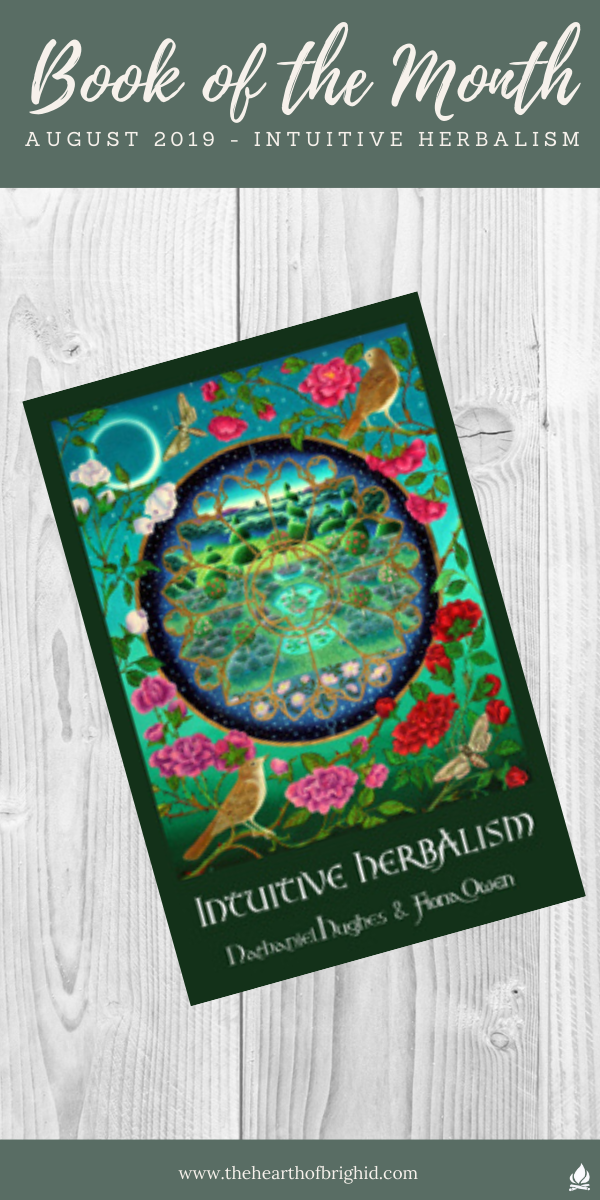
Witches Book of the Month – Intuitive Herbalism

Witches Book of the Month – Intuitive Herbalism

Intuitive Herbalism is a book which demands a different kind of book review. Because it is a different type of book. It demands you approach it differently


Don’t expect to pick up this book and ‘learn herbalism’.


Expect to pick up this book and be challenged, changed, and have a fire lit under you.


I really had to force myself to finish this book – because as with every other time I’ve read it, by half way I am just way too inspired to keep reading. It makes me get outside and be with the plants. But that’s a good thing.


A VERY good thing.

And when I started writting this book review I just couldn’t do the usual ‘this is what I liked’ and ‘these are the bits I wasn’t fussed’ about.

animism in witchcraft

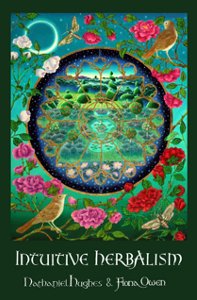
Just look at the cover.


Really look at it.


How could I ever start to review where that artwork takes you to?

 Even if you never open the front cover but just gaze at that image I’m confident you will have changed the way you interact with herbs and approach the art of herbalism.

I’ve returned to Intuitive Herbalism many times over the last couple of years. It’s very skilfully written and it describes the kind of relationship which I believe a witch should have with the plants they work with magically and medicinally.


Too many books focus on the exact plant to use for this, that or the other that might be wrong with you. All too often they push you to the local herbalists to pick up a small packet of ready prepared dried herb.


They tell you the dosage. The preparation method. The way to administer it.


And whilst that works – in a sort of witched up doctorish sort of way – it reallys lacks SOMETHING.


But they also go way too far, way too fast. Jumping in to curing ulcers with chickweed before you can even recognise it growing in the corner of the garden you keep forgetting to weed. And certainly before you have even said hello to it.


Its not really what I consider to be the heart of witchcraft.


For me herbalism is an absolutely central part of witchcraft. One of the foundational pillars.


But I didn’t get into this game to learn lists of herbs to do this or that. Or learn lists of any correspondences for that matter.


Herbalism as Part of a Wider World View


This book is about SO MUCH MORE THAN PLANTS. It will open doors for you in so many ways.


If you are interested in real, down and dirty, practical witchcraft which is about spirit intercession and working with the powers around you, then this book will help you.


Working with plant spirits can seem like a nice gentle introduction to working with spirit.


And yes, it is a good way in. Its easily accessible.


But its not gentle.


Its life changing.

The Life Changing Magic of Marie Kondo has nothing on the Life Changing Magic of Talking to a Dandelion.

And Intutitive Herbalism is a deceptively gentle introduction into a different way to approach the use of plants and herbs.

It places dreaming, intuition and experience at the forefront of importance.


But, and this is critical, it does not pander to the new-age ‘I experienced it so it is true’ delusions which often go hand in hand with intuitive approaches. It calls out that Bulls**t.


Nicely of course. This is never a book which jars with you. Its non-gentleness is not found in its approach but in its results. And Intuitive Herbalism is a book which will deliver results.


But lets get back to the “telling you how it is” part of the book.


It begins by telling you quite directly that working with plants is not about what you can gain from the pant. That’s not how relationships work.


But how often is this EXACTLY how we approach magical work? Which qualities of this plant can I use? What gifts can this goddess give me? What lessons can this animal teach me? Imagine how many friends you would have in the human world if that was the approach you took to meeting new people.


It then reminds you not to assume you know a plant just because you sat with it for half an hour.


Again, who amongst us is not guilty of this to some degree? But no matter how powerful a meditation or an interaction is, its just a moment in time. Just a tiny slither of what actually exists. Its not an externally all pervading truth. It is true right and here and right now. But that’s it.


Next the Author encourages you to recognise projections of your own mind, but to follow them and work with them, recognising them as attempts of your imagination to make sense of the spirit world.

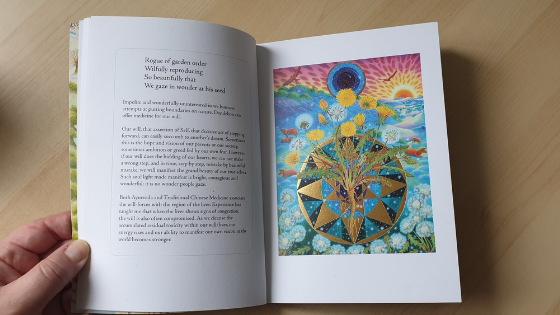
intuitive herbalism pictures

And this bit is game changing.


Read those sections extra carefully. The Hall of Mirrors is the chapter where this really jumps out, but the message is weaved throughout the book.


Read the words over and over until they really sink in.


And apply to every single area of your magical life.


What does this book Teach You?

The first time I “finished” the book Intuitive Herbalism I was underwhelmed. I had approached it as a standard herbalism text book. After a few chapters I put it down and forgot about it.


I got distracted by my garden for a few weeks.


I also acquired quite a few house plants.


And my kitchen herbs suddenly took over my windowsill. And every dish I cooked.

But the book stayed on the bedside table unread. The book which had called to me so strongly seemingly hadn’t really resonated enough with me to even read to the last chapter.


The same thing happened the second time I read it. I think it was the third time I read it that I actually got to the very end.


Each time I enjoyed reading it. It uplifted me. I felt a connection with it in my heart.  But I was left thinking at the end ‘what do I know now that I didn’t before I read it’?


But then I realised. Then I got it.


I was approaching this as a book.


I was expecting THE BOOK to teach me.


And I’d missed the point entirely.


Because actually, it’s not a book it’s a guide.


A guide which moved me through a journey I’m not sure I realised I was on.


That’s just how it was for me – it could be entirely different for you. I was going through huge changes in my practice when I picked this book up the first time, and so my experiences are in part a reflection, a projection, of my own inner changes at that time.


It was true in the moment. But this time when I read it it was different. More obviously powerful and game changing.


Go in without expectation. Expect only your own experience.


I think the person who left the first review on Amazon had a similar experience as me though:


Beautifully crafted book but didn’t really contain enough information for my needs.


I hope this person had the same subtle experience I had. That the vast shift in perception undergone just wasn’t recognised.


Because this isn’t a book which gives information. Herbalism isn’t about information. Witchcraft isn’t about information.


Its what you do that counts.


The Hearth of Brighid Magical Book Club

This is my initial review of the book Intuitive Herbalism ahead of our month of discussion and study. If you would like to read along with members of the Hearth of Brighid then please join us over in our facebook group. 

JOIN OUR FACEBOOK GROUP!

animism in witchcraft
Beginners guide to animism
Animism in witchcraft guide
Animist Witch
animism in witchcraft
Beginners guide to animism
Animism in witchcraft guide
Animist Witch
animism in witchcraft
Beginners guide to animism
Animism in witchcraft guide
Animist Witch

Looking for More?

If you enjoyed this article on witchcraft for beginners and want to dive deeper then our brand new email course for total newbies – Changing Tides – might be for you. Find out more about this course, and our other training opportunities on our courses page.

A is for Animism

A is for Animism

This week I am starting a new series of blog posts – An A-Z of Witchcraft. The aim is to explain some important words which Traditional Witches use a lot (and forget not everyone knows what they mean!) and to talk about some important issues. They will be shortish articles – an overview and introduction, a taster to an important topic and not an in-depth consideration of all the nuances. 

I am kicking off the journey with one of the most important concepts in my witchcraft – Animism.

A is for Animism……

Quick Overview: Animism is the belief that everything has a spirit, an animating principle. It is the belief that mind is not separate from matter. The spiritual not separate from the physical. From the smallest microbe to the whole universe. There is life force within it.

animism in witchcraft

I’ve chosen to start here because whilst animism is one of my four pillars of witchcraft, for many years it was a word I couldn’t connect with, I couldn’t really understand.

The books I read generally described it as ‘a belief that all things have a soul’. And I just couldn’t connect with that idea. Back then I had quite clear ideas of what a soul was, and that didn’t sit well with my concept of what a plant or a rock was.

But in recent years the term has gone through something of a rehabilitation. It’s thrown off many of the negative layers and thinly veiled racism of Victorian colonialism which used it to justify the description of other practices and beliefs which it didn’t properly understand as primitive (ok it was rarely veiled). But importantly for us as witches the attention it’s received recently has resulted in many really well written books and articles which make the concept of animism easier for us to understand.

The value of this resurgence isn’t that we have suddenly discovered animism, but that people like me have read the books and articles, engaged with them, and gone “WOW!! That’s what I am!!” For me I’ve come to realise that Animist describes so well the hotch potch of labels I’ve been trying to wrestle with for so long. The label of witch has always worked for me – but that describes what I do, not what I think, what I believe or what I feel. Perhaps that doesn’t matter – labels are just labels after all – but it brings a certain clarity and simplicity to me which I love.

Well at least that’s the value to me!

In Search of a Definition

A definition of animism is still not easy to come by, because it doesn’t describe a single thing. There are a number of different types of animism, but they all have something in common.

For me, animism describes a ‘more than human’ world – or a more than human universe. It’s an appreciation that in some form all things consist of a living energy, it has spirit, and a personality (or a more than human persona).

This spirit is not equivalent to our human spirit and consciousness. Its not a ‘lower’ level of what we have. It’s something very different to us – but equally valid and alive.

It is important that in acknowledging that non-human inhabitants of the world have personalities that we do not accidently project human personalities on them. This is a common error I see (and have fallen into myself, so this is not judgement!). But this places us, the human, at the top of the hierarchy, and misses the fundamental point of an animist worldview.

Its most common with pets – its incredibly easy to project human traits and emotions on to our family cat or dog.

But we need to move away from Hierachy and understand our interactions as a web, a net, where each has an integral role upon which others rely in some way or another.

One of my favourite quotes, which sums up the idea of animism for me comes from David Suzuki a Canadian Academic and Environmental Activist:

“There is no environment ‘out there’ separate from us. The environment is embedded in us. We are as much a part of our surroundings as are the trees and birds and fish, the sky, water and rocks.”

This acknowledgement that we are all part of a living whole is an idea that really powers my magical work. When there is no separation we become a continuum of energy which can be travelled. It opens up the idea that we may be reincarnated – or our energy transformed after death – into something other than human. It opens up a possibility that our ancestors are not only humans. All things that have ever been in the universe are an ancestral spirit.

You may have heard about Spirits of Place or Genus Loci (concepts I’ll cover further in this A to Z). In an animist world view this spirit is a combination of EVERYTHING found within a place. It is rich and full, and pulsing with energy. Far from being primitive it is brimming with wisdom of the Earth.

Animist world views tend to include ancestor worship, belief in non human beings such as fairies or gnomes or other nature spirits, and a reverence for sacred earthly features (sacred rocks or sacred waters). Something animates each of these to lift them beyond the physical.

The final point I will make in this rapid consideration of Animism is that it is not a faith or a path in and of itself. It’s an aspect of a wider path. An aspect of my witchcraft for example. It exists not alone, but within a wider practice of an individual or a community.

And I will leave you with a wonderful passage from Sarah Anne Lawless – from her website which is sadly offline at present. But it sums up perfectly and far more elequantly all that I wanted to say here:

Animism Is:

“Animism is a philosophy backed up by practice, it is a way of life and a way of thought. Animism is your personal relationship with nature and with the inhuman spirits who inhabit and compose nature. It is a relationship of respect and value for all things and all beings, visible and invisible. All life is sacred and sentient, even those outside of your current definition of life and even those regarded as malevolent. Within a balanced ecosystem, all life serves a purpose– even those who may seem like the villain at first glance. Animism is the hands-on spirit work of building an awareness of and relationship with the spirits of plants, trees, fungi, animals, insects, waters, forests, mountains, plains, deserts, elemental forces, and the spirits of the dead buried under your feet. When you live within nature you realize you are a part of it, not separate from it. It becomes important to know as much about your surroundings as possible because your survival depends on your knowledge of and respectful treatment of the land, plants, and animals around you.

(Sarah’s new website, whilst not containing the vast wealth of articles yet of her old site, is still worth a visit: https://banefolk.com/ )

 Further Reading:

 The Handbook of Contemporary Animism edited by Graham Harvey

Mystery Teachings from the Living Earth: An Introduction to Spiritual Ecology by John Michael Greer

The Wakeful World: Animism, Mind, and the Self in Nature by Emma Restall Orr

The Genius of Birds by Jennifer Ackerman

The Hidden Life of Trees by Peter Wohlleben

Spiritual Ecology: The Cry of the Earth by various authors

The Secret Commonwealth of Elves, Fauns and Fairies by Robert Kirk

The Tradition of Household Spirits: Ancestral Lore and Practices by Claude Lecouteux


(Next Time: B is for Bling!)

Doorway to Witchcraft and Magic
animism in witchcraft
Beginners guide to animism
Animism in witchcraft guide
Animist Witch

Looking for More?

If you enjoyed this article on witchcraft for beginners and want to dive deeper then our brand new email course for total newbies – Changing Tides – might be for you. Find out more about this course, and our other training opportunities on our courses page.

Mari Lwyd

Mari Lwyd

The Mari Lwyd – A Welsh Living Tradition of Death

Dark and Cold. The night is still. You hold your breath as the clock ticks closer toward midnight. A knocking is heard.

The heart stops. Death is at your door.

Mari Lwyd Witchcraft

During the darkest part of the year, when spirits of the dead walk across the land of the living. When the living slam shut the doors and bar the window to the biting cold. When it feels like the lords of Winter will never lessen their grip. It is then that Mari Lwyd comes to chase away the darkness.

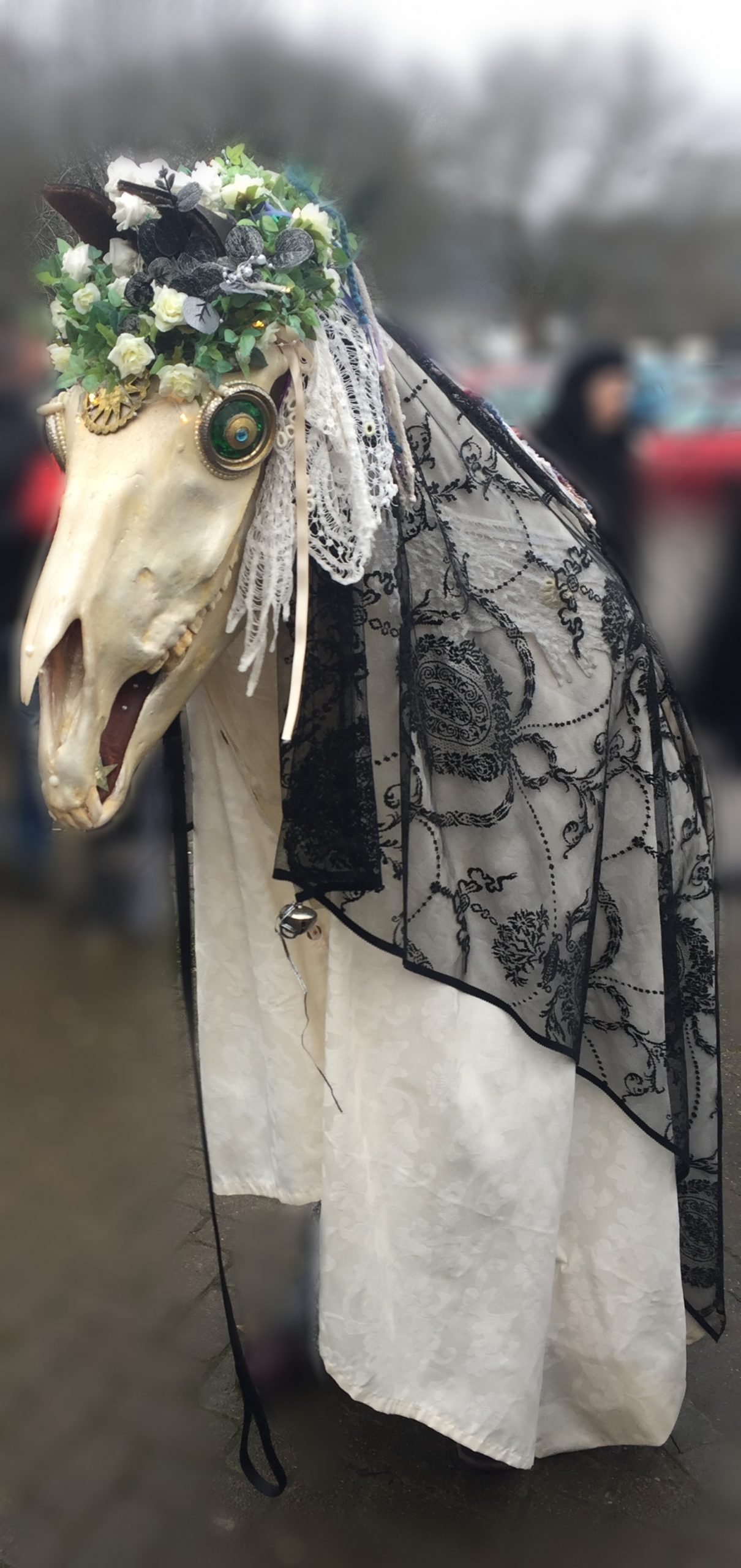
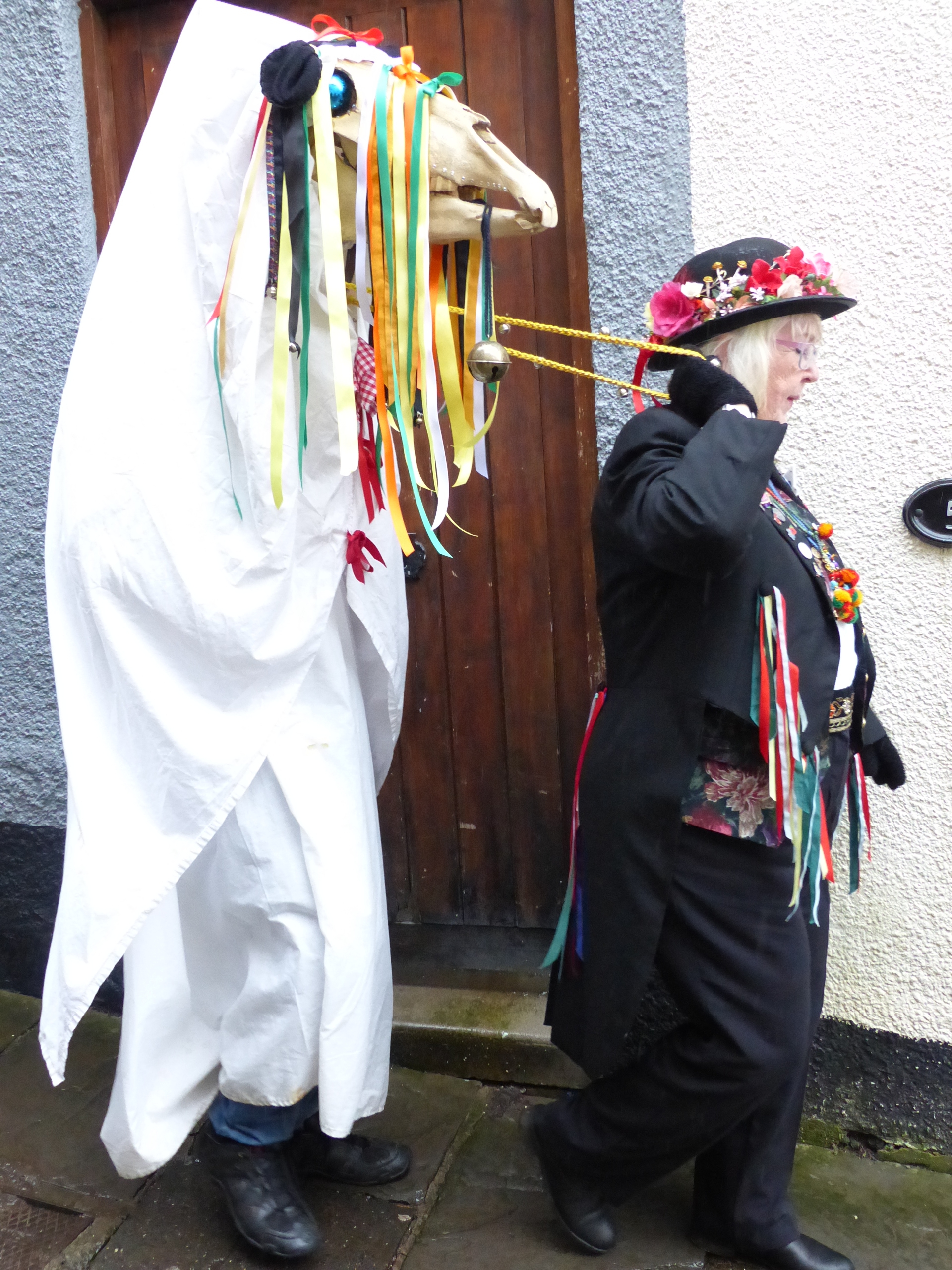
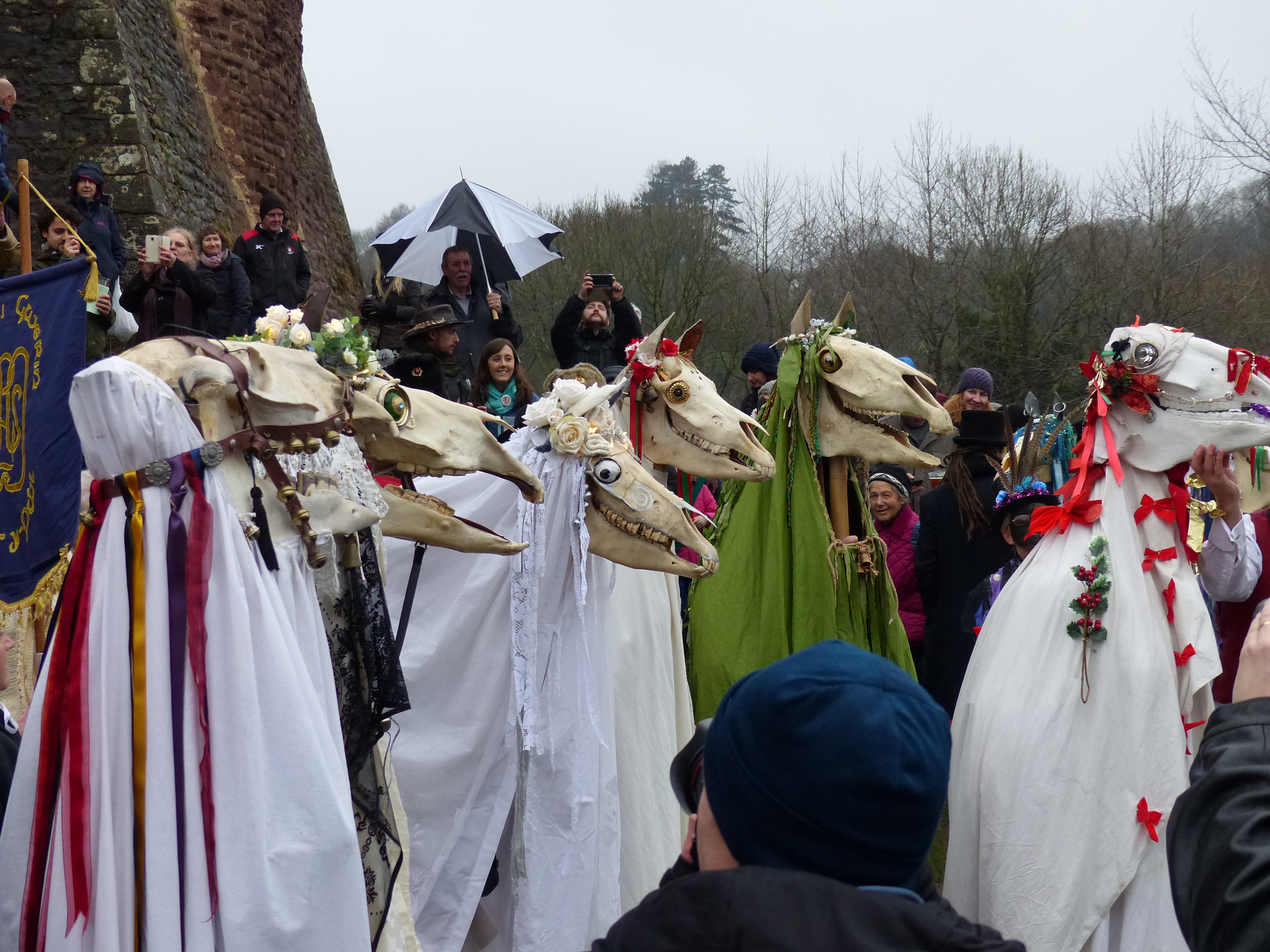
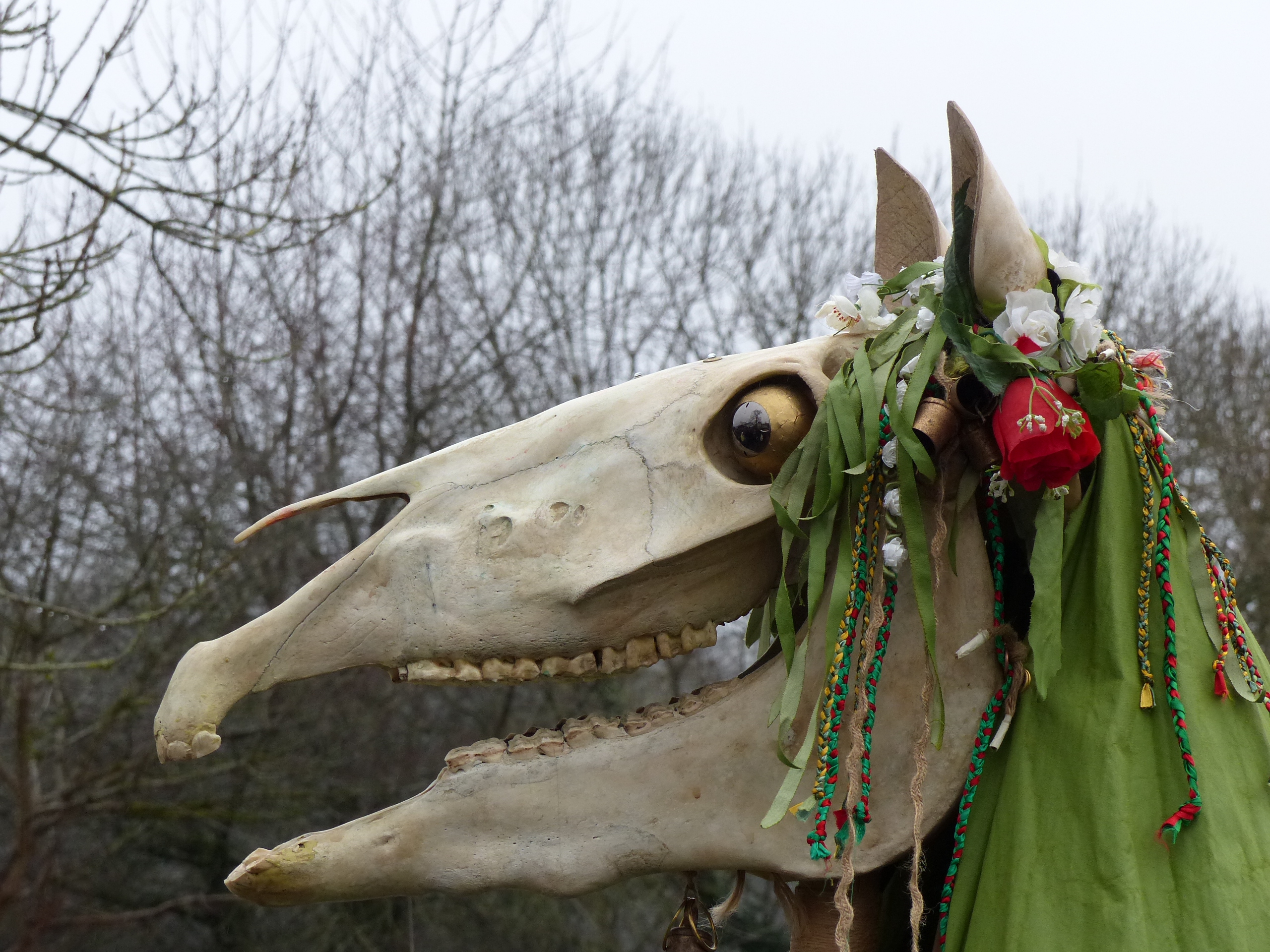
The snap of her teeth, the ring of her bell, the calls of her retinue herald her coming. She is instantly recognisable — a real horse’s skull, teeth intact, glass bottle eyes, shrouded in white sheets, reined, adorned with ribbons, lace, maybe flowers, and led by the ostler at the head of a party of revellers processing amongst communities in south Wales.

It is almost midnight. The new year tantalisingly close, yet out of grasp. The party rattle windows. A fear grows.

Midnight.

Midnight.

Midnight.

Midnight.

Hark at the hands of the clock.

Now dead men rise in the frost of the stars

And fists on the coffins knock.

Vernon Watkins, “Ballad of the Mari Lwyd”

As you crack the door ajar slightly and stare into the beer bottle eyes of the Mari you are transported. Carried from this world to hers. Taken into a place between places.

Juxtaposed against the sight of a skeletal horse’s head draped in ghostly sheets are the hauntingly beautiful melodies of her carol. The voices and poetry wrap around you and carry you further into her clutches.

It is a striking experience, and one which is growing in popularity once again. Today the Mari Lwyd is a reconstruction, primarily an entertainment in most places, and it is doubtful that many taking part will be aware of its ancient origins. But this is a ritual of liminality — a conversation between life and death. It is a chasing away of the old and the clearing of the dead ready for the new life of the new year.

A Mari Lwyd in Wales

First Encounters

One might meet the Mari for the first time in a small Welsh market town. Tucked away in the corner of an old-fashioned pub with roaring fire a commotion starts. Locals and strangers alike run to the windows to watch the Mari proceed down the street toward us. Hardcore old timers are wiser, using this moment of excitement to make it to the bar and order the next round of drinks.

Catching only glimpses of the strange party heading nearer, soon there’s a rattling of the door and breaking somewhat with tradition, the party makes its way into the bar where the Pwnco begins.

The Pwnco is a sort of verbal contest, a poetic back and forth between the Mari Party and those inside. It can be rowdy, somewhat out of tune, but full of merriment. The Mari may be accompanied by a small troop — the leader cracking a stick on the tables, a few singers with flat caps or blackened faces and a gent or lady in a top hat. 

It is difficult to draw one’s attention away from the skull. Logically one knows it is a person with a skull on a long stick, but in the midst of even the simplest of rituals, it is death herself — a still point in the midst of the merriment. Led from table to table the eyes pull one in — drawn to the mystical world of Welsh magical traditions.


Regional Variations of the Mari Lwyd


The Cowbridge Mari is just one of many versions of the Mari Lwyd performed south Wales. Each has its own distinctive features, built around a common framework. It is the differences which make this tradition so special — a living tradition which evolves to reflect the community within which she lives. For example, the Cowbridge Mari Lwyd has evolved to replace the traditional Pwnco with English verses interspersed between the usual Welsh Language introductory verses. Cowbridge is the only community where you will experience this – although some other communities now also include English Language Carols after the main ritual – and it reflects the predominantly English speaking community in this part of the country. It demonstrates a very simple but perfect blending of distinct elements of Welsh cultural traditions.

a Group of Mari Lwyd

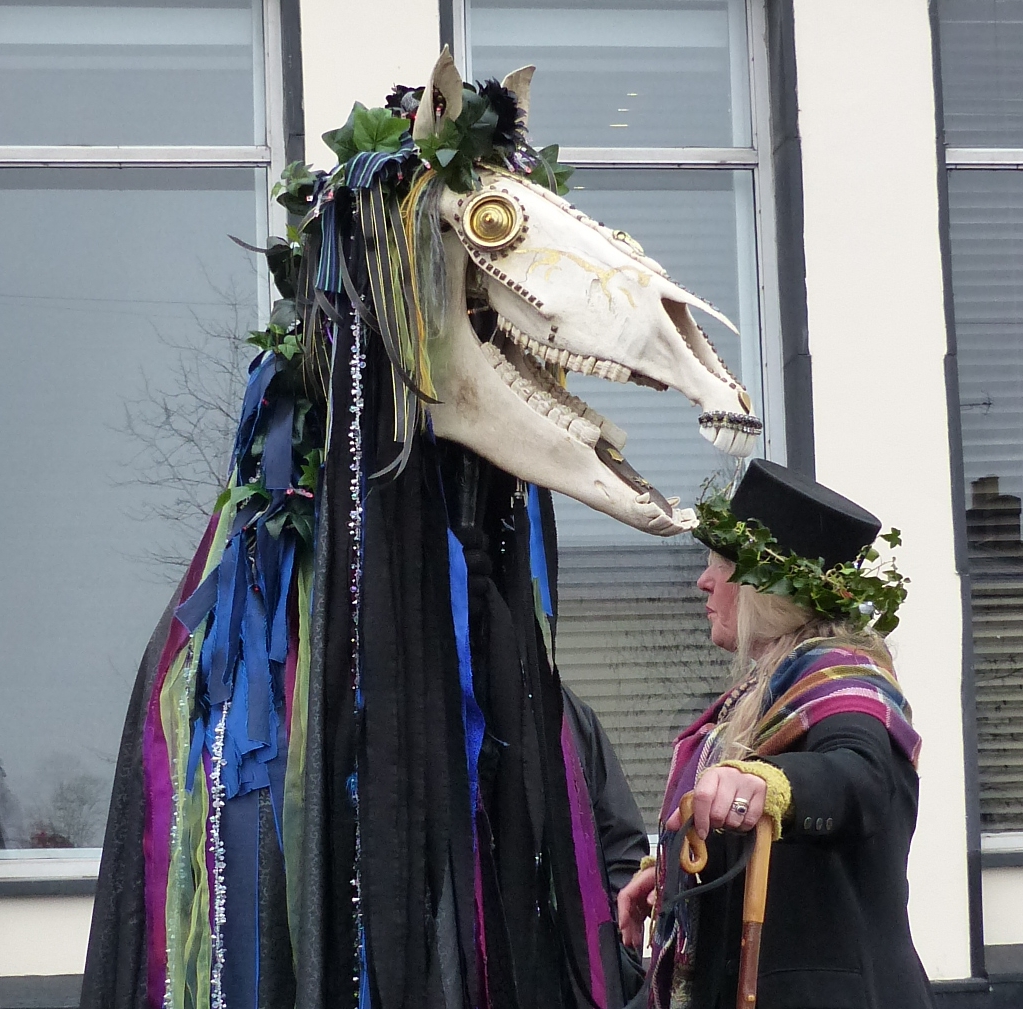
The central figure – Mari herself – is one of the most obvious elements which differ between locations. Each is uniquely decorated and instantly recognisable.


Some Mari are simple, some elaborate.

Jaws that move.

Eyes that flash.

Ribbon Mari Lwyd

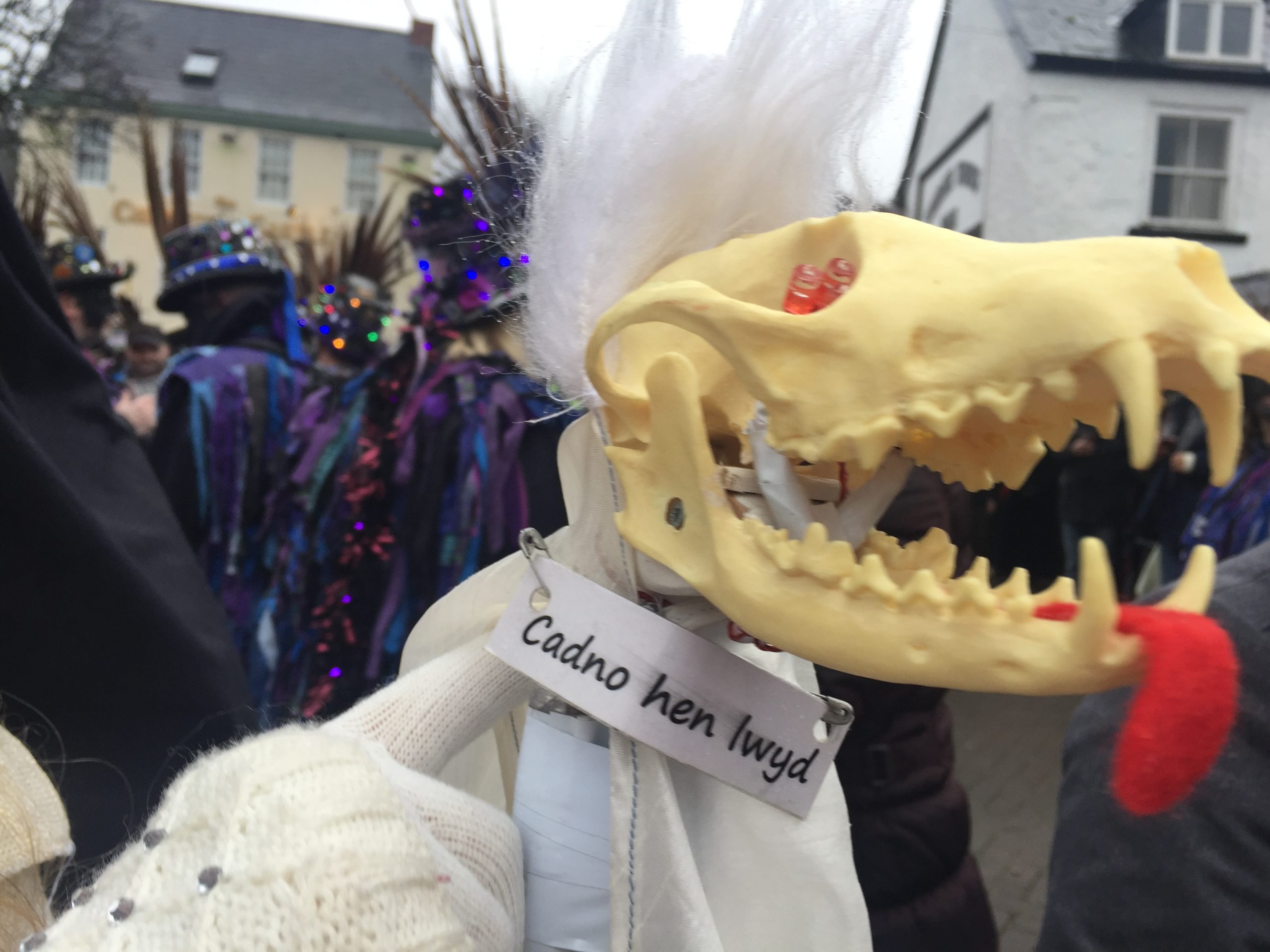
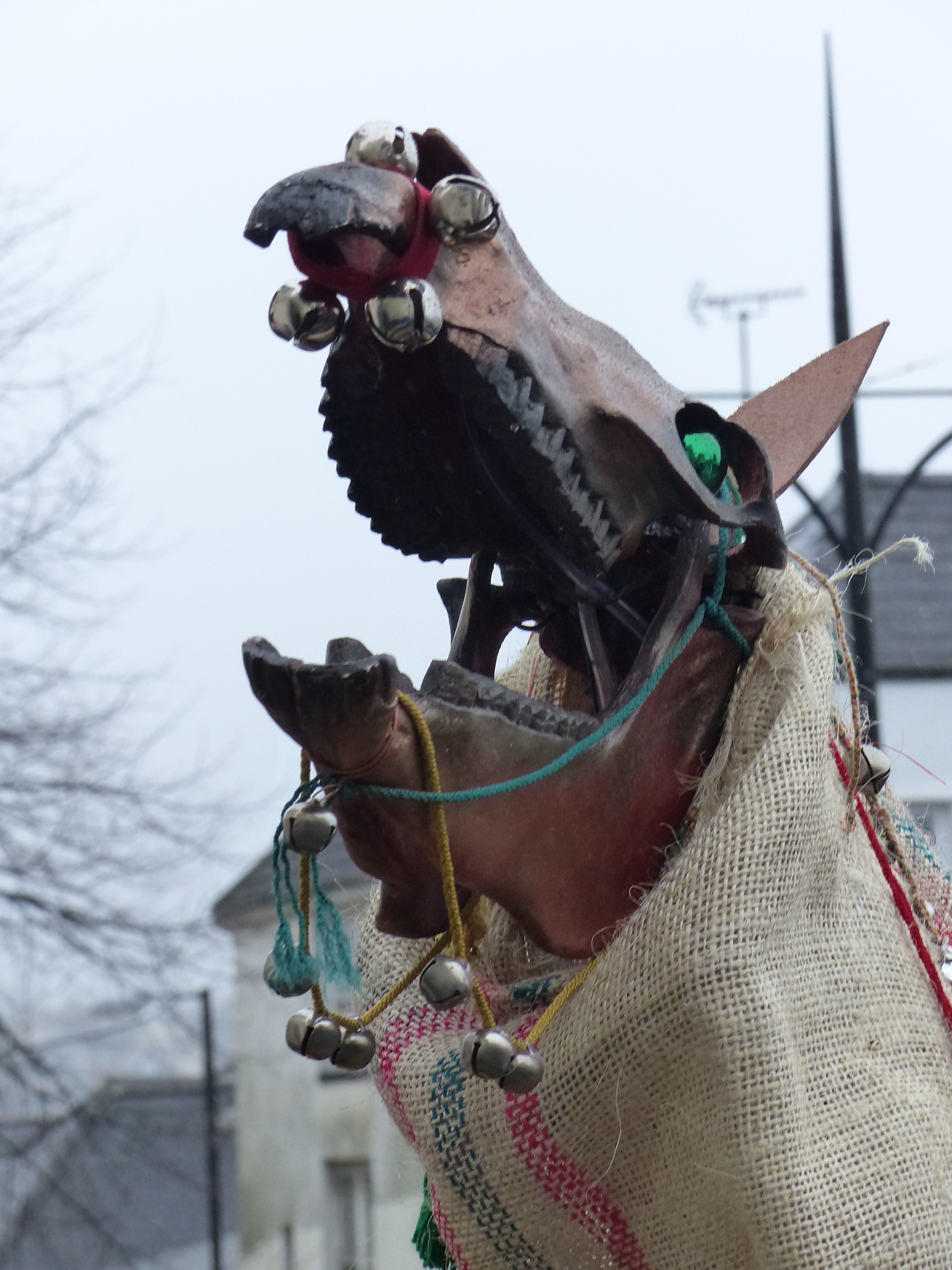
Most Mari, but not all, are horses skulls. Traditionally they would be buried in lime to remove the flesh, and then affixed to a long pole before being decorated. Not all Mai were prepared in this way, there are accounts of ram’s head being taken out by young lads in the Gower during the early 1900s and wooden carved skulls were used in Tradegar. Today school children make cardboard Mari Lwyd, and some troops have metallic versions. More recently I have seen a foxes skull adopting the term ‘cadno hen lwyd’ (old gray fox) accompanying a traditional Mari Lwyd.

Cadno hen lwyd
metal mari lwyd

Music

Once prepared the Mari is led from house to house, pub to pub, around the town seeking entry by means of a riddle and poetic battle. Almost all versions of the Mari maintain the traditional introductory verses, although the specifics of tune and wording may vary. As with all elements of the ritual, these could be made up on the spot, or are sometimes recorded and passed down through generations.

The verses generally announce the coming of the Mari party, describe their journey and ask for food and refreshment to be prepared. The version below was collected in 1953 at Brynmenyn near Bridgend and preserved by the National Museum of Wales, A fantastic recording can be found about half way down this page

The Welsh Speakers amongst us can find the full words and sheet music here.


Wel dyma ni’n dywad,

Gyfeillion diniwad,

I ofyn (o)s ciwan gannad,

I ofyn (o)s ciwan gannad,

I ofyn (o)s ciwan gannad

I ganu.

Os na chawn ni gannad,

R(h)owch glywad ar ganiad

Pa fodd ma’r ‘madawiad

Pa fodd ma’r ‘madawiad

Pa fodd ma’r ‘madawiad

Nos (h)eno.

It loses something in translation; the Welsh language is intrinsically embowed with poetry and subtle meaning which cannot quite be captured in English. However, it provides a hint towards what is being shared:

Well, gentle friends

Here we come

To ask may we have leave

To ask may we have leave

To ask may we have leave

To sing.


If we may not have leave,

Then listen to the song

That tells of our leaving

That tells of our leaving

That tells of our leaving

Tonight.


We have cut our shins

Crossing the stiles

To come here

To come here

To come here

Tonight.


If there are people here

Who can compose englynion

Then let us hear them now

Then let us hear them now

Then let us hear them now

Tonight.


If you’ve gone to bed too early

In a vengeful spirit,

Oh, get up again good–naturedly

Oh, get up again good–naturedly

Oh, get up again good–naturedly

Tonight.


The large, sweet cake With all kinds of spices:

O cut generous slices

O cut generous slices

O cut generous slices

This Christmas–tide.


O, tap the barrel

And let it flow freely;

Don’t share it meanly

Don’t share it meanly

Don’t share it meanly

This Christmas–tide.

Mari Lwyd at Chepstow

Once the people in the house have responded, the Pwnco begins. A back and forth, a battle of wits. A few good-humoured insults. If the Mari outsmarts the household then she can enter — so they must put up a good fight. The length of this section can vary enormously depending on the creativity and perseverance of each party. Those seeking the most authentic and traditional of pwnco are well advised to visit the village of Llangynwyd, where the heroic efforts of a Mr Cynwyd Evans kept the traditions alive and known. His image is now memorialised in the local pub signage, standing in his top hat and suit alongside his Mari.

Unfortunately it is this part of the ritual which has fallen away in many places, but occasionally it shows up. In Llantristant it is said that only once in the last 20 years has Mari been challenged with pwnco (when it happened it was a spontaneous challenge by an elderly local, perhaps hoping to revive a tradition he remembered).

Below is one example of pwnco which remains popular across a number of communities. It was collected in a popular book on carolling traditions without its originating location being recorded. It is possible that it might have been introduced to many places in recent years by participants researching this less used element of the ritual rather than indicating a widespread traditional use of this format.

First Round:
The Mari Lwyd party sing: “Open your doors, Let us come and play, It’s cold here in the snow. At Christmastide
The House-holders reply “Go away you old monkeys Your breath stinks And stop blathering. It’s Christmastide.”

Second Round:
Outsiders: “Our mare is very pretty (The Mari Lwyd), Let her come and play, Her hair is full of ribbons At Christmastide.”
House-holders (Giving in) Instead of freezing, We’ll lead the Mari, Inside to amuse us Tonight is Christmastide.” —Rev. Mark Lawson-Jones, Why Was the Partridge in the Pear Tree?: The History of Christmas Carols

Of course, eventually the Mari will be victorious, not least because of her hundreds of years of experience! Additionally her presence within the house is a blessing upon it and as such the inhabitants want her to enter. The closing has remained the most constant amongst the various localities, and has been preserved by FolkWales:

Wel dyma’r enw feinwen (Well, this is the name of the maid) Sy’n codi gyda’r seren (who rises with the stars) Wel dyma’r enw feinwen Sy’n codi gyda’r seren A hon yw’r washael fawr ei chlod (and here is the wassail of great praise) Sy’n caru bod yn llawen. (which loves to be merry) A hon yw’r washael fawr ei chlod Sy’n caru bod yn llawen.
Dymunwn i’ch lawenydd (I wish you all joy) I gynal blwyddyn newydd (in having a new year) Tra paro’r gwr i dincian cloch (while the man is ready to ring the bell) Well, well yn boch chwi beunydd. (better and better may you be daily)
Ffarweliwch, foneddigion, (farewell, gentlemen) Ni gawsom croeso digon. (we have had welcome enough) Bendith Duw f’o ar eich tai (god’s blessing be on your house) A phob rhyw rhai o’ch dynion. (and on everyone of your men)

After entering the house a party begins! The carols and songs performed by the company are an eclectic mix – once again different in each local area. In Llantrisant we find examples of Carols which have their root in the mid-Wales plygain tradition such as Ar Gyfer Heddiw’r Bore. Again this points to an evolving and not static tradition of the Mari, as well as a mingling of Christian and Pagan beliefs. It is likely these were introduced to the community in the heyday of the mining industry when significant population movements took place into the industrial areas of south Wales.

Ar gyfer heddiw’r bore
‘n faban bach, faban bach,
Y ganwyd gwreiddyn Iesse
‘n faban bach;
Y Cadarn ddaeth o Bosra,
Y Deddfwr gynt ar Seina,
Yr Iawn gaed ar Galfaria
‘n faban bach, faban bach,
Yn sugno bron Maria
‘n faban bach.

Am hyn, bechadur, brysia,
fel yr wyt, fel yr wyt,
I ‘mofyn am dy Noddfa,
fel yr wyt
I ti’r agorwyd ffynnon
A ylch dy glwyfau duon
Fel eira gwyn yn Salmon,
fel yr wyt, fel yr wyt,
Gan hynny, tyrd yn brydlon,
fel yr wyt.

For the sake of this very morning
As a little baby, a little baby
Was born the root of Jesse
As a little baby;
The Strong one who came from Bosra,
The Lawmaker of old on Sinai,
The Redemption to be had on Calvary
As a little baby, a little Baby,
Suckling the breast of Mary,
As a little Baby.
Therefore, sinner, hurry, As thou art, as thou art,
To ask for his Sanctuary,
As thou art;
For thee the well was opened
Which washes thy black wounds
Like the white snow on Salmon,
As thou art, as thou art,
For that, come promptly,
As thou art.

The eating, drinking and general horseplay (pun intended) are an essential part of the Mari ceremony. It is here that the real work is done — the chasing away of the unwanted spirits. It is a simple matter of raising and focusing energy, both directed and magnified by the bones of the horse. After all, only the dead can chase the dead away.

Meanings and Reasons

Much mystery surrounds the tradition of the Mari Lwyd. When did it start? What is the purpose? Even seemingly basic questions such as ‘what does the name Mari Lwyd mean?’ have no clear answer. For scholars and academics this causes difficulties and much effort is poured into resolving these mysteries.

But to magical folk, this difficulty does not present itself. For some, the meaning of the ritual will be clear immediately. For others, the truth lies in the grey space between possibilities.

The simplest, and most often-used translation of Mari Lwyd is Grey Mare. Other possibilities suggested include ‘Holy Mary’ or ‘Grey Mary’ hinting at Christian overtones to the recreations. One compelling (but etymologically unsound) theory links ‘Mare’ with ‘nightmare’ raising, images of Germanic night demons instilling terror in sleepers. Whilst the roots of the words are entirely different, they bring insight nonetheless. One purpose of the ritual after all is to frighten away unwanted spirits.

A Ritual of Liminality

That the Mari Lwyd is a ritual of liminality is clear. Liminal space is the place between two realms of reality and can be physical, psychological or time-bound. The Mari occurs in all three spaces.

  • It is physically in a doorway — between inside and out. Between the revellers and the householders.
  • It is psychologically between joy and terror — the merriment of the party and the grotesque form of an undead horse. Indeed it is between life and death.
  • It is in the liminal time between years. Whilst there is a broad timeframe for Mari to appear all are linked with the New Year in some way, be it the secular, Celtic, or even Julian calendar New Year. More broadly it can be seen as a time of seasonal transition.

A clear boundary is created in multiple senses that is plain for all to see. An us and a them. Insiders and outsiders. Those with command over death, and those afraid of its earthly symbolism.

The tension is intensified with the challenge and response of the participants. Those familiar with traditional initiatory rites might well consider the Mari Lwyd in light of their own experiences and find some enlightenment as to the ritual purpose of the hooded horse.

In the end it is the horse which straddles both realms, a trait which sits well with its mythical associations. In the first branch of the Mabinogi, Rhiannon is first introduced to us as a being of another realm riding a shining white horse. She later acts as horse herself carrying guests to court and in the third branch is whisked away to the otherworld. Rhiannon herself is caught in a liminal space — between her role as an earthly wife and her origin as an otherworldly being.

Whilst considering the Mabinogi one cannot help but wonder about the severed head associations too, with Bran’s head buried in London as a protection. Interestingly discoveries of foundation burials of horses’ heads are not uncommon in Celtic regions, including examples in Wales. Most often the heads are found buried under thresholds or the hearth – both liminal space — although on occasions they have even been found at each corner of a building. Other mythological associations include Epona, the trojan horse, and the Grim Reaper riding his white horse. Welsh folk tale collections abound with stories of horses and mysterious riders which transcend the boundaries between the ordinary and the supernatural. Sometimes the horse acts to warn the living, sometimes themselves an apparition. Oftentimes the tales combine horses and crossroads layering the symbolism and bringing us back to themes of liminality.

The horse is a symbol of strength — and yet it is domestic. Wild horses are found in prehistoric cave paintings dating to around 30,000BC. By 2000BC they had become a form of transportation, with evidence of the earliest chariot burials dating from this period. The horse’s power is used toward assisting its master to cultivate the land, leading to associations of sovereignty. Its manure, prized amongst gardeners, is just one of the reason for the association of the horse and fertility.

So in the Mari Lwyd ritual we find complex symbolic interplays which come together in an unusual form of first-footing. Even if the precise meaning of the practice are hidden from sight, just a cursory consideration of horse symbolism can provide insights which transform the Mari Lwyd from a slightly odd Welsh custom to a powerful and transforming ritual.

Roots – Ancient, Modern, or Both?

It is beyond the scope of a short article such as this to fully explore the origins of this tradition. Certainly there is no consensus of opinion, with passionate arguments for it being an ancient pagan tradition stamped out by the church, and for it being a modern creation (perhaps recreation) which gained popularity with the rise of Celtic Nationalism in the 18th Century.

What we do know is that the first published account was in 1798 by J Evans (in A tour through parts of North Wales), and prior to this no record is made of the custom.

A man on new year’s day, dressing himself in blankets and other trappings, with a factitious head like a horse, and a party attending him, knocking for admittance, this obtained, he runs about the room with an uncommon frightful noise, which the company quit in real or pretended fright; they soon recover, and by reciting a verse of some cowydd, or, in default, paying a small gratuity, they gain admission.

Even if there is scant recorded evidence of a continual tradition then there are clear echos of a distant past. There are, for example, clear links with ancient Horse Queen Cults, and with traditional horse goddesses such as Epona, Rhiannon or Macha. In this respect it has much in common with other horse rituals found in Celtic regions at this time of year. Láir Bhán, accompanied by the messengers of Muck Olla in Ireland, reinforce the imagery of death and the underworld whilst the custom of Laare Vane in the Isle of Mann has a similar structure as a first footing tradition.

Interestingly the counter point of the year, Beltaine also has strong equine associations. Obby Oss customs form a central part of modern May Day celebrations. Their expressions are much more stylised and evoke joy and laughter — for example the world-famous Padstow Obby Oss.

A second echo of the past is the theme of a hero barred from a feast, leading to an exchange of banter. This is found in Celtic literature, such as the Welsh tale Culhwch and Olwen, and whilst not evidence of a direct unbroken tradition from medieval times, it is hard to believe that there is no link. There are too many similarities in the various threads to discard them entirely. Perhaps the most compelling explanation is one of a relatively modern origin utilising older wisdom skilfully weaved together.

The exact origins will probably always remain unclear. The Mari Lwyd ritual we experience today is most likely a resurgent ritual, but one whose roots reach down into the rich cultural traditions of our Celtic ancestors. Like all strong traditions it continues to grow and develop as each year passes. Whilst some Mari are performances, given almost as museum pieces, the most traditional are living traditions which evolve each year. New verses of the pwnco are created on the spot, some living on to future years, and some just occurring in the moment — themselves an example of a liminal space created within the ritual.

A final thought. Once Mari has chased away unwanted spirts from the darkest recesses of the year, bestowed protection and fertility on the homes of the village, what then? What of an undead horse left to wander freely amongst a community without legitimate employment? No, she too must be frightened away, sent back, and the nails on the coffin once more (metaphorically) secured.

None can look out and bear that sight,

None can bear that shock.

The Mari’s shadow is too bright,

Her brilliance is too black.

None can bear that terror

When the pendulum swings back

Of the stiff and stuffed and stifled thing

Gleaming in the sack.

Midnight. Midnight. Midnight. Midnight.

Hark at the hands of the clock.

Links and Further Reading:

10 Witchcraft Tools the Beginner does not need

10 Witchcraft Tools the Beginner does not need

I’m fed up of seeing lists of the “top 10 tools a beginner witch needs”. You might have guessed that if you read last week’s blog post B is for Bling.  Witchcraft tools have a place in our magic and ritual. But we MUST STOP telling ourselves and other witches that the...
A to Z of Witchcraft – B is for Bling

A to Z of Witchcraft – B is for Bling

Lets continue the Witchcraft A to Z with Pagan Bling. It’s a non judgemental mini rant about the current drive for **stuff**. We see it in all aspects of life. But  as witches the constant need for the shiniest objects, biggest crystals, perfectly carved statues, all...

Why Meditate?

Why Meditate?

Most of us know that meditation is, apparently good for us. We’ve been told oh so many times we should get up half an hour early to find time to meditate, or that we should skip reading that magazine at lunchtime in favour of a few breathing exercises. It used to be...

Witchcraft in the City

Witchcraft in the City

Witchcraft in the City…… is it possible?


Nature is at the very heart of Witchcraft. Its wild edges call to us and stirs the very depths of our souls. Images of the natural world pervade our ideal of the traditional witch – alone on a deserted windswept moor, gales raging, or quietly wandering through country lanes along hedge lines unseen by all except field mice and hedgehogs.

But what about those of us who live in the city? How do we ever live up to this ideal? Are we condemned to a magical life of rosemary and basil in pots on the kitchen window, and nothing of the wild and free unrelenting forces of nature our country cousins enjoy?

How can we ever do **real** witchcraft in the city?

So many times I hear people say that they live in a concrete jungle, that there is no nature near them. That all there is is roads and pavements and industrial estates.

I say look again! Open your eyes to what is really outside your front door.

witchcraft outside the door

We might have covered over the land with concrete and bricks. And we might have thought we are in control. But nature is constantly pushing through, it’s urge to grow and expand is almost impossible to contain, and a good witch can commune just as well with a patch of grass on the pavement as with the deep forest trees.

Between the cracks of the pavement, in the corners of the car parks, poking out from the mortar of a wall, on those small rectangles of grass that sometimes run between pavements and roads. Even the centre of roundabouts can be chocked full of plants and wild things.


And it is not that we don’t know its there most of the time. Its that it seems, well, not wild enough.

As though a tree deep in an ancient forest will have more wisdom to share than a tree in Asda carpark.

But a tree is a tree and it can tell you about its experience. Its leaves and branches may see cars and busy people all day long, but its roots go way down into the same damp dark ground. It has to battle every day to survive. And Im guessing not many people talk to him.

Open your heart and your eyes and nature will find you the teacher you are seeking.

To the small plantain leaves, clinging onto the side of the curb for dear life, the city is a pretty wild place. He will have a lot to teach you about holding firm, and becoming strong in a foreign seeming place.

The tiny pink flower I saw at the weekend in a motorway services car park had a lot to teach me about finding beauty where I least expected it.

And recently I’ve learnt as much from a family of seagulls raising their young on the roof of Pizza Hut in Cardiff as I have from the ospreys and kites I’ve watched from a field in mid-Wales.

Witchcraft is wild and untamed. It is not beautiful and romantic.

It might not look how it does in beautiful blog posts, or carefully crafted coffee table books. But its there. When you look.

Even when nature is cultivated by landscape designers and teams of council maintenance operatives it has a life and a personality of its own too. The Wild Edges creep in. My work car park has perfectly manicured hedges and shrubs, but a fox has made its home amongst it. On the mornings when I am unlucky enough to be arriving before 7am I am often treated to a glimpse of him darting back and forth between the cars and bushes, and in a day that will be filled with concrete, corporate wallpaper, and plastic plants it grounds me and reminds me that Witchcraft is Everywhere. 

So my challenge to you is simple – look for a bit of overlooked nature next time you are outside. Acknowledge it – speak to it and say ‘hello’ in whatever way feels right to you. And do that every time you leave the house or office. Make it your mission to find the wild places and be part of them.


Looking for More?

Would you like more help to feel and connect with the magical energies which are flowing all around you everyday? The powerful energies which exsist EVERYWHERE and can be be used to fuel ALL the magic you will do as a witch? Then our short email course Changing Tides might be for you. We’d love to welcome you into the hearth and get you started on your witchcraft journey. 

10 Witchcraft Tools the Beginner does not need

10 Witchcraft Tools the Beginner does not need

I’m fed up of seeing lists of the “top 10 tools a beginner witch needs”. You might have guessed that if you read last week’s blog post B is for Bling.  Witchcraft tools have a place in our magic and ritual. But we MUST STOP telling ourselves and other witches that the...

read more
A to Z of Witchcraft – B is for Bling

A to Z of Witchcraft – B is for Bling

Lets continue the Witchcraft A to Z with Pagan Bling. It’s a non judgemental mini rant about the current drive for **stuff**. We see it in all aspects of life. But  as witches the constant need for the shiniest objects, biggest crystals, perfectly carved statues, all...

read more
Why Meditate?

Why Meditate?

Most of us know that meditation is, apparently good for us. We’ve been told oh so many times we should get up half an hour early to find time to meditate, or that we should skip reading that magazine at lunchtime in favour of a few breathing exercises. It used to be...

read more

Reinventing The Wheel

Reinventing The Wheel

Why I abandoned the Wheel of the Year……. and still embrace it.

This blog is a story in two halves. It’s the story of how I rejected the modern Pagan Wheel of the Year and built a practice based on the land on which I live. But it’s also a story about how that same wheel binds us together as a community and so has great value. But mainly it’s a plea to you to make a conscious decision about what YOUR practice looks like and WHY.

My craft is a local craft.

It is centred on connection with the land where I live and living in harmony with its rhythms and pulses. Working with its energies and the spirits which inhabit it.

Many of those rhythms are inextricably linked with the solar cycle, the passage of the earth around the sun and our proximity at any given time to our closest star. The passing seasons caused by the changing tides of sun energy make their mark upon the earth and provide us with a visual calendar that marks the high points of the year.

So there is no wonder the seasons have always been at the heart of land based magical working. But the energies of the seasons are constantly changing. They are not fixed blocks of energy which suddenly switch, or even with short overlaps. They are a constant in and out breath of the earth, constant rises and falls – not building for several months and then waning. Its an ebb and flow within a larger ebb and flow.

The Wheel of the Year

 The link between the changing face of the land through the seasons is so strong that the rise of modern of paganism has brought with it a seemingly all pervading calendar of festivals – the wheel of the year.

This relatively modern invention of 8 festivals, conveniently spaced throughout the year, provides a fixed set of high days and holidays for us to celebrate.


Changing Tides

But it is not how our ancestors would have celebrated or marked the changing of the seasons. Or more accurately they are not all how all our ancestors would have.

The individual roots of each festival are, perhaps, found in older festivals, observances and folklore. But as a whole, as a system, it is basically modern.  A product of the mid 20th Century.

Its what I learnt when I first became a witch – I read about The Wheel in my very first Witchcraft book. I bought into it wholeheartedly because, it seems, its what we do.

But, scratch the surface and its slightly uncomfortable.

What of all the other old customs and festivals which have been celebrated in Britain for hundreds of years? Why these 8 days for everyone?

And marrying the *correct* festivals and dates to what is *actually* happening in my landscape simply doesn’t work for me. It takes a huge effort to shoehorn the celebrations onto the rhythm of my immediate landscape.

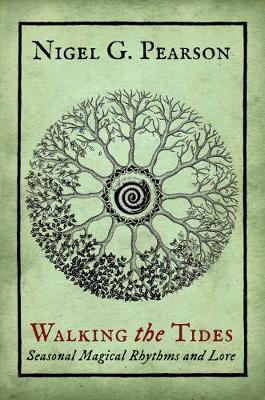
Nigel Pearson gives a great example in Walking the Tides of where the general pagan calendar is often followed for pagan calendar’s sake – Lughnasadh/Lammas. It’s a corn and grain festival held around 1 August. But as a traditional witch whose practice is local and land based WHY would you celebrate/mark this if you don’t live in an agricultural area or have anything to do this farming community in your daily life.

Given I’m a British witch – and much of the wheel of the year originated in Britain (Gardner, and Ross Nichols, leaving Aiden Kelly aside for now) then the discrepancies aren’t huge. But its enough to be uncomfortable. I can only imagine how someone in Norway or Greece or Australia would follow the standard wheel! Its not just about ‘flipping’ the wheel and marking Candlemass whilst the other side of the world celebrates Lammas – it’s a whole different climate, with different roots and ancestry and natural rhythms.

A final complication is that even in Britain it’s not the same every year. The timing of the energy high and low points are always slightly different.

 My Solar Cylces

 So a few years ago I took a radical decision to stop doing it! I stopped using the calendar to dictate how I would acknowledge and work with the changing seasons.

 Instead I began to watch, and track and FEEL.

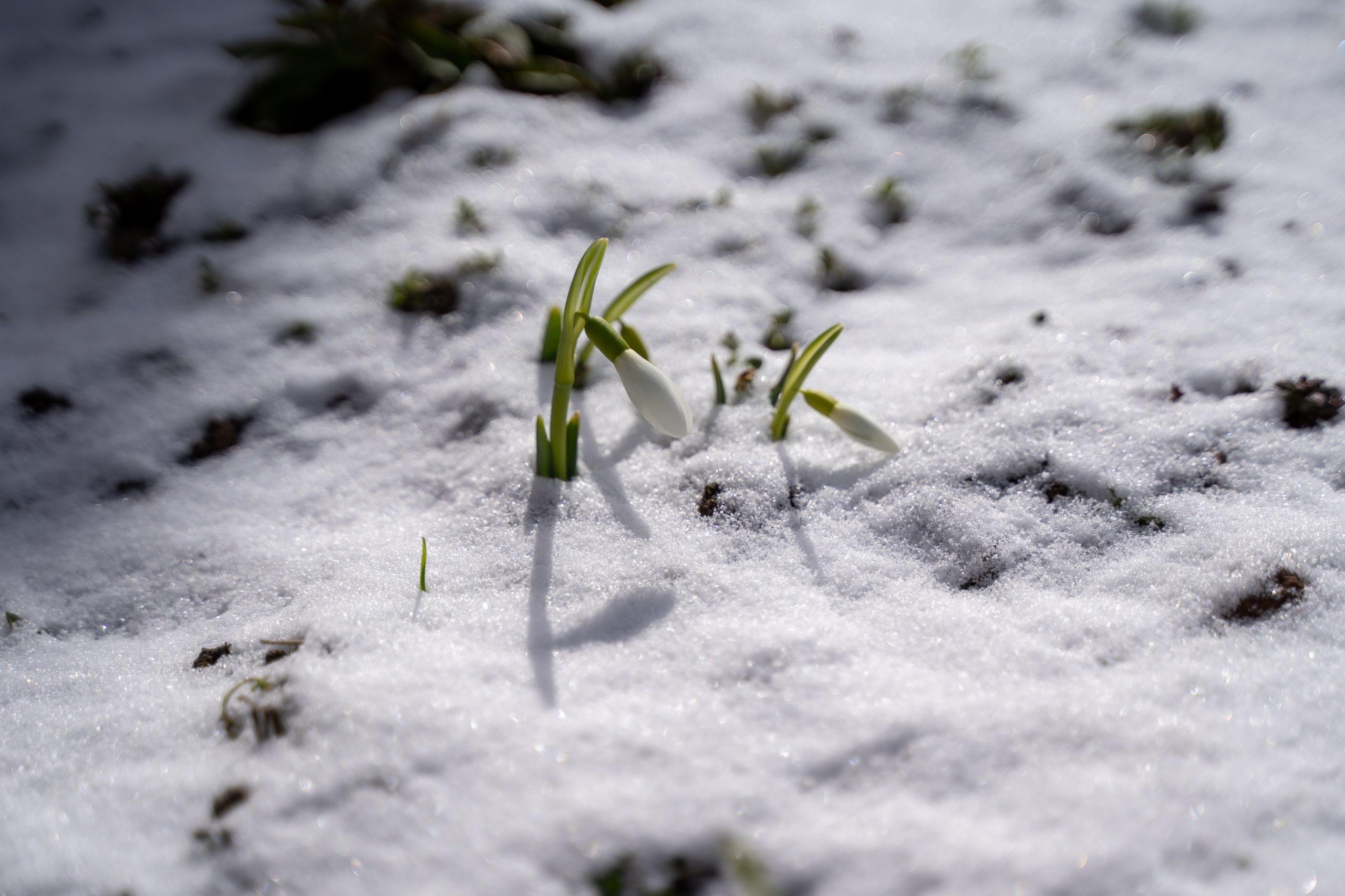
I discovered that the solstices really are huge moments of changeable energy for me. They are tipping points. Potential filled, looking over the abyss after a slow climb, I hold on waiting to rush toward the light or to the darkness. I find there is a startling change of pace immediately following them. This winter for example trees budded, daffodils burst forth and snowdrops blossomed all within days of the solstice. But then after this rapid burst forth towards the light a slower pace and energy followed up.

 I discovered the equinoxes are a period of calm. Of reflection and balance. But not much really happening in terms of changing energies. There is a feeling of liminality – space between – as the pendulum pauses for a moment.

 I found truth in Nigel Pearson’s assertion in walking the tides that the solstices and equinoxes are times of great change on the inner levels which beginning to bubble into the physical plane several weeks later. 

 So I work with the changing energies of the solstices and equinoxes and acknowledge the constant changing energies between them.   

So I work with the powers of the solstices and equinoxes, and acknowledge the constant changing energies between them

I don’t ‘celebrate’ spring on 1 Feb just because its Candlemas, but when I see the first snowdrops my heart lifts and my thoughts and magics turn to new beginning.

I do not mark autumn at Lammas because it was once the start of  the Grain Harvest, but when I feel the sun’s heat and intensity reduce and the edges of leaves begin to turn then again my magic changes, and my communication with land spirits change.

This also helps me with the dilemma I’ve had for many years as a pagan – the seasons are not equal lengths! Autumn is often quite short actually. But because I don’t have to space it out nicely then THAT’S OK!!

Doorway to Witchcraft and Magic

That said the changing of the seasons won’t be entirely different each year. I can be fairly sure that summer will start to show its face somewhere between the middle of April to a week or so after 1st May. In this sense each point on the wheel has a ‘window’ of around 3 to 4 weeks. And there are no hard and fast rules. Whilst the May Blossom is a good sign of Beltane – and a very traditional one – because Im not on the look out for a single day on which to celebrate I also don’t look out for a single sign of the seasons changing.  

I dislike the term wheel of the year because it implies this unmoving 8 festivals

But I also like it because it creates an image of a never-ending cycle of energies constantly moving and cycling around the sun. No beginning or end – no “new year”, but a constant hum of movement.

In order to form a relationship with the land I live upon I had to take a decision to let the land lead me.

To stop forcing a calendar onto it.

And it’s worked beautifully…. In my solitary practice.


It has brought me more magical results and better connections.


But…


But…….


But, well, it didn’t help my connections with people!


With other pagans.


With the community.


As modern suburban-ish witches we shouldn’t be so connected to the land that we cease to be connected to people.

The witch has always lived on the edge, in the liminal space on the far side of society. But most of us aren’t able to be so separate from the world. I have to interact with ‘real world’ people in my job, who don’t really understand me and so I crave the company of other witchy folk.

And the festivals provide a wonderful community focus. A time to come together to make magic and memories. To share, to commune, to do the big important magical works when needed.

In order to celebrate in a group you have to make compromises. We have to be a bit practical. Can’t just call the coven and say ‘the hawthorn has bloomed! Beltane tonight!’

And so, the fixed calendar does serve a purpose – an important purpose.

Let’s not throw the baby out with the bath water.

Let’s not pretend that our ancestors followed the wheel of the year, but if it works for your community sharing these festivals is a wonderful way to stay bonded, to create a community rhythm and feel part of a greater whole.

If we accept that Wheel of the Year is a convenient teaching tool, a convenient shared model of seasonal changes then it becomes easier to not get hung up on its flaws. If we accept that celebrating these 8 festivals doesn’t preclude the marking of more obscure days such as Randwick Wap or Abbots Bromley Horn Dance It becomes easy to marry it with a locally focused practice built on our own personal roots and ancestry.

So now I do both.

I follow my own land based, seasonal path. With rituals designed to reflect the energies I am marking or utilising for magic. And I dip in and out of the larger community festival activities when I feel the need to connect with a wider group.

rainbow sparkle sabbat cake

As long as I do it with intention, I can have my cake and eat it.

You just need to make sure that you control the spokes of the wheel.

Don’t celebrate somebody else’s spokes – unless they make sense to YOU and where YOU live and YOUR community. If you feel disconnected to a seasonal festival its OK not to celebrate it. It’s also a brilliant idea to add extra ones in which mean something to you, or has historical significance for your area or your ancestors.

Do some research into folk traditions in your little corner of the world. And let your history guide you along with the land.

Track the Seasons and the changing energies – my mini e-book might help with that!

Over the next 12 months I am going to share my reflections on the passing year, on the turning tides here on this blog. I’ll roughly coincide them with the popular festivals because this blog is about community. But I’ll tell you what’s happening in my bit of the world and encourage you to do the same where you are.

I hope you enjoy the series. And I hope it inspires you and gives you the confidence to create your own wheel and celebrate your own seasonal changes.

reinventing the pagan wheel
reinventing the wheel for witches
ditched the wheel of the year
traditional witchcraft wheel of the year

Looking for More?

If you enjoyed this article on witchcraft for beginners and want to dive deeper then our brand new email course for total newbies – Changing Tides – might be for you. Find out more about this course, and our other training opportunities on our courses page.